How FAIR-R is your data?
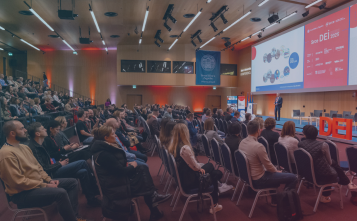
At the Open Science Conference 2025, hosted by Leibniz Strategy Forum Open Science and organised under the lead of the ZBW – Leibniz Information Centre for Economics, Vanessa Guzek (Miller International Knowledge) engaged conference participants into an interactive solution session “How FAIR-R Is Your Data?”. Participants tested real datasets against the extended FAIR-R framework — Findable, Accessible, Interoperable, Reusable, and Responsibly licensed for AI reuse. While FAIR focuses on technical openness, FAIR-R adds a crucial dimension: datasets must also be Responsibly licensed and legally ready for reuse in artificial intelligence (AI) and machine learning workflows.
Working in six groups, participants audited datasets such as Open Images, Dryad, UK Data Service, FDZ-Bildung, and GoTriple metadata and stress-tested the FAIR-R checklist, identifying recurring barriers: missing or scattered licenses, NC/ND restrictions, ambiguous third-party rights, unclear provenance, and absent machine-readable license or metadata fields. Ethical and GDPR aspects were also often missing for human or qualitative data.
In summary, none of the reviewed datasets fully met the FAIR principles, and therefore, not FAIR-R either. The session showed that while FAIR is necessary, FAIR-R is essential to make Open Data legally sound, machine-actionable, and trustworthy for AI reuse.
The session revealed concrete upgrades: co-locating human- and machine-readable licenses (SPDX/schema.org), adding explicit ethics and data protection checks, clarifying collection-level authorship and citation, and strengthening repository preservation and PID strategies. The revised FAIR-R Checklist v1.1 will incorporate these improvements validated through the group work.
The session structure, slides, and FAIR-R checklist are available on Zenodo. The session report, the FAIR-R Checklist v1.1, and the mini audit “snapshots” will also be published there.